



Chapter
4 OrganTech's Challenge (2)
- Hybridizing Living Tissue and Artificial Materials
4 OrganTech's Challenge (2)
- Hybridizing Living Tissue and Artificial Materials
Last updated: March 13, 2026

Miho Ogawa, Ph.D. Director, CTO
Ph.D. in Science from Tokyo University of Science Graduate School. After working at Otsuka Holdings and RIKEN, became Director and CTO of OrganTech Inc. Promotes research, development, and commercialization in regenerative medicine and organ induction. Recipient of the Japan Sjögren's Syndrome Society Award and the Economist Future Award 2023 SDGs Division. View full profile >
Ph.D. in Science from Tokyo University of Science Graduate School. After working at Otsuka Holdings and RIKEN, became Director and CTO of OrganTech Inc. Promotes research, development, and commercialization in regenerative medicine and organ induction. Recipient of the Japan Sjögren's Syndrome Society Award and the Economist Future Award 2023 SDGs Division. View full profile >
The Idea of Combining Biology and Artificial Materials
In Chapter 3, we explained that it may be possible to regenerate a whole tooth with its functions. At the same time, we also introduced a major challenge: it is difficult to directly apply a laboratory-created "tooth germ" to human treatment.
(If you would like to learn more about this issue, please refer to Chapter 4 for healthcare professionals.)
So how can the concept of regenerating teeth be connected to practical treatment?
An important clue lies in the periodontal ligament, which we have discussed repeatedly since Chapter 1.
In a natural tooth, many important functions are not performed by the tooth itself, but by the periodontal ligament, which:
・gently absorbs the force of biting
・allows us to sense the feeling of chewing
・works in harmony with the surrounding bone
In other words, a new idea emerged:
Even if we do not regenerate an entire tooth,
if we can reproduce the periodontal ligament, which is the "key to tooth function,"
we may be able to restore functions close to those of a natural tooth.
Based on this idea, OrganTech, Inc. developed a new concept:
・an osseointegrated implant, an artificial material with a long track record of safety and reliability
・living biological tissue that provides physiological functions, such as the periodontal ligament
By combining these two elements, a new form of treatment called hybrid medicine becomes possible (Figure 1).
(If you would like to learn more about this issue, please refer to Chapter 4 for healthcare professionals.)
So how can the concept of regenerating teeth be connected to practical treatment?
An important clue lies in the periodontal ligament, which we have discussed repeatedly since Chapter 1.
In a natural tooth, many important functions are not performed by the tooth itself, but by the periodontal ligament, which:
・gently absorbs the force of biting
・allows us to sense the feeling of chewing
・works in harmony with the surrounding bone
In other words, a new idea emerged:
Even if we do not regenerate an entire tooth,
if we can reproduce the periodontal ligament, which is the "key to tooth function,"
we may be able to restore functions close to those of a natural tooth.
Based on this idea, OrganTech, Inc. developed a new concept:
・an osseointegrated implant, an artificial material with a long track record of safety and reliability
・living biological tissue that provides physiological functions, such as the periodontal ligament
By combining these two elements, a new form of treatment called hybrid medicine becomes possible (Figure 1).
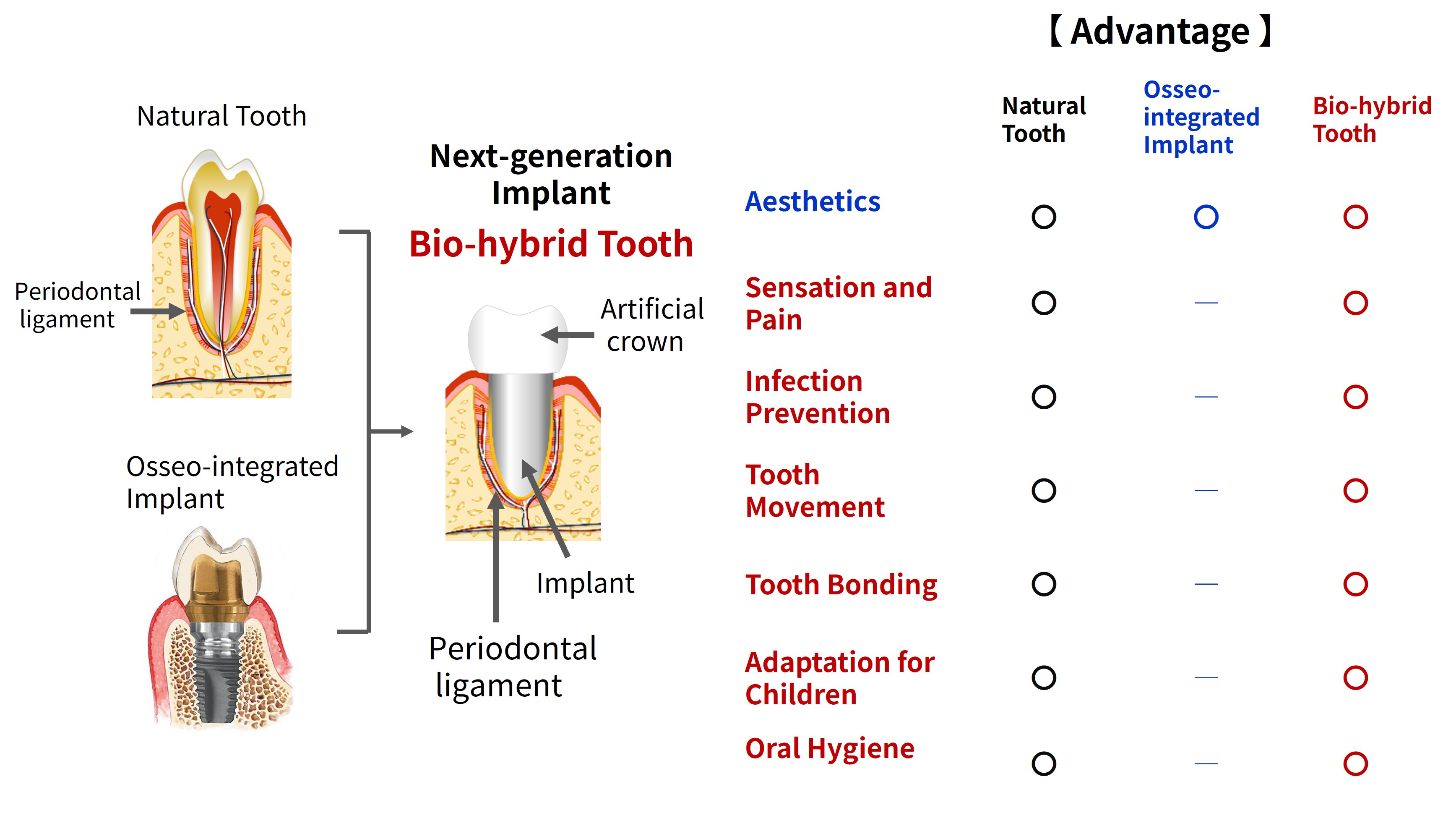
Figure 1 Biohybrid Tooth Combining Biology and Artificial Materials
A New Form of Dental Treatment Opened by Hybrid Technology
In this hybrid concept:
・artificial materials provide the structural support needed to withstand biting forces
・biological tissues provide physiological functions such as sensing chewing forces, adjusting those forces, and maintaining harmony with the alveolar bone
This approach connects:
・the ideal of regenerative medicine
・with the practical reality of modern medical treatment.
It is neither purely artificial nor purely regenerative.
By combining the strengths of both, a new possibility for dental treatment is emerging.
・artificial materials provide the structural support needed to withstand biting forces
・biological tissues provide physiological functions such as sensing chewing forces, adjusting those forces, and maintaining harmony with the alveolar bone
This approach connects:
・the ideal of regenerative medicine
・with the practical reality of modern medical treatment.
It is neither purely artificial nor purely regenerative.
By combining the strengths of both, a new possibility for dental treatment is emerging.
How Do Biology and Artificial Materials Connect?
So how does the biological periodontal ligament connect to an artificial implant, and how do they function together?
In Chapter 5, we will explore in more detail how an implant and living tissues can integrate through the periodontal ligament, creating a new type of bioengineered tooth.
In Chapter 5, we will explore in more detail how an implant and living tissues can integrate through the periodontal ligament, creating a new type of bioengineered tooth.

* This article reflects research and development-stage information as of March 13, 2026, and does not represent finalized medical procedures or products.