



Chapter
1 Teeth at the Heart of a Healthy Society
— The Key Role of the Periodontal Ligament
1 Teeth at the Heart of a Healthy Society
— The Key Role of the Periodontal Ligament
Last updated: January 30, 2026

Miho Ogawa, Ph.D. Director, CTO
Ph.D. in Science from Tokyo University of Science Graduate School. After working at Otsuka Holdings and RIKEN, became Director and CTO of OrganTech Inc. Promotes research, development, and commercialization in regenerative medicine and organ induction. Recipient of the Japan Sjögren's Syndrome Society Award and the Economist Future Award 2023 SDGs Division. View full profile >
Ph.D. in Science from Tokyo University of Science Graduate School. After working at Otsuka Holdings and RIKEN, became Director and CTO of OrganTech Inc. Promotes research, development, and commercialization in regenerative medicine and organ induction. Recipient of the Japan Sjögren's Syndrome Society Award and the Economist Future Award 2023 SDGs Division. View full profile >
Our Health Begins with Being Able to Eat Using Our Teeth
The act of "eating," which we perform every day, is not merely about obtaining nutrition.
Chewing food, swallowing, speaking, and forming facial expressions—all of these
functions are made possible by the coordinated activity of the teeth and surrounding
tissues. Teeth function as an integrated system with the jaw bones, muscles, and nerves
to chew, perceive, and support (Figure 1), forming the foundation of our quality of life
(QOL) and long-term health. In this sense, it is no exaggeration to say that the center of a
healthy society lies in the ability to eat using one's teeth.
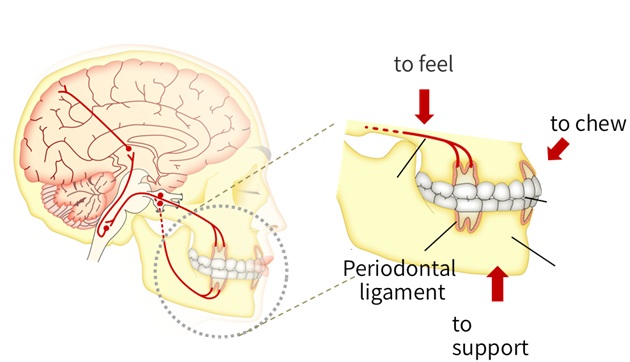
Figure 1 The role of teeth
The Periodontal Ligament — The Structure That Truly Supports Tooth Function
Although teeth appear to be directly attached to bone, in reality, a specialized tissue
called the periodontal ligament exists between the tooth and the alveolar bone (Figure
2). The periodontal ligament functions like a biological ligament that supports the tooth
and plays several essential roles:
• gently absorbing forces generated during chewing
• transmitting sensations such as bite pressure, discomfort, and pain to the brain via blood vessels and nerves
• protecting the tooth and the body from bacterial invasion
Because of the periodontal ligament, we can subconsciously regulate biting force and eat without placing excessive stress on the teeth and jaws. The true foundation of tooth function lies not in the natural tooth alone, but in the periodontal tissues, including the periodontal ligament.
• gently absorbing forces generated during chewing
• transmitting sensations such as bite pressure, discomfort, and pain to the brain via blood vessels and nerves
• protecting the tooth and the body from bacterial invasion
Because of the periodontal ligament, we can subconsciously regulate biting force and eat without placing excessive stress on the teeth and jaws. The true foundation of tooth function lies not in the natural tooth alone, but in the periodontal tissues, including the periodontal ligament.
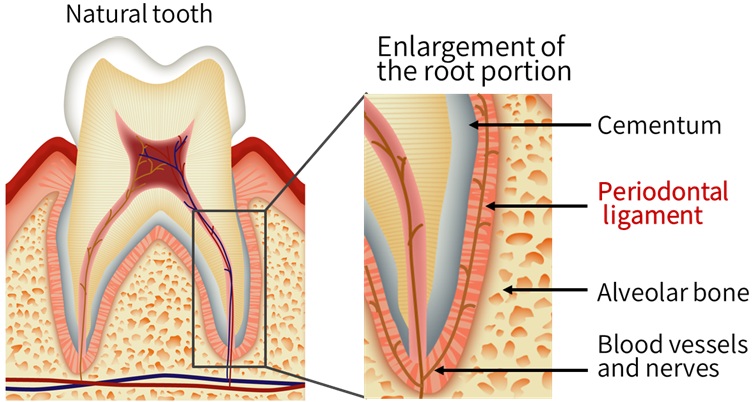
Figure 2 The periodontal ligament that supports the tooth
What Do We Truly Lose When a Tooth Is Lost?
Humans develop only two sets of teeth—deciduous teeth and permanent teeth. Once a
natural tooth is lost, it does not regenerate spontaneously. When a tooth is lost, the
following changes occur:
• reduced chewing ability
• difficulty in eating
• altered oral sensation
This loss is not simply the absence of a tooth—it also represents the loss of the entire supporting system of the tooth, beginning with the periodontal ligament.
When a tooth is lost, to what extent can its function truly be restored? Today, dental implant therapy is the primary treatment option for tooth loss. While implants can restore appearance and biting force, their structure differs fundamentally from that of the natural tooth.
"How closely can current implant treatments reproduce the true function of natural teeth?"
"What challenges remain?"
In Chapter 2, we will examine the current state and limitations of dental implant therapy.
• reduced chewing ability
• difficulty in eating
• altered oral sensation
This loss is not simply the absence of a tooth—it also represents the loss of the entire supporting system of the tooth, beginning with the periodontal ligament.
When a tooth is lost, to what extent can its function truly be restored? Today, dental implant therapy is the primary treatment option for tooth loss. While implants can restore appearance and biting force, their structure differs fundamentally from that of the natural tooth.
"How closely can current implant treatments reproduce the true function of natural teeth?"
"What challenges remain?"
In Chapter 2, we will examine the current state and limitations of dental implant therapy.

* This article reflects research and development-stage information as of January 30, 2026, and does not represent finalized medical procedures or products.