



Chapter
2 Five Remaining Challenges of Current Implants
— The Functions of the Periodontal Ligament
2 Five Remaining Challenges of Current Implants
— The Functions of the Periodontal Ligament
Last updated: August 3, 2026

Yoshio Shimo Representative Director, CEO
Graduated from Waseda University School of Science and Engineering and earned a master's degree from Chuo University Graduate School of Policy Studies. He was appointed Managing Officer at Toyota Motor Corporation in 2016, President of Hino Motors in 2017, and Chairman of Hino Motors in 2021. He has served as Representative Director and CEO of OrganTech since September 2024. View full profile >
Graduated from Waseda University School of Science and Engineering and earned a master's degree from Chuo University Graduate School of Policy Studies. He was appointed Managing Officer at Toyota Motor Corporation in 2016, President of Hino Motors in 2017, and Chairman of Hino Motors in 2021. He has served as Representative Director and CEO of OrganTech since September 2024. View full profile >
Hello, everyone. I am Shimo from OrganTech, Inc.
In Chapter 1, we discussed our goal of establishing the standard for next-generation implants. In this chapter, I would like to explain the challenges associated with current dental implants that form the background to our approach.
The global dental implant market continues to expand (Figure 1). According to the market research firm Global Market Insights, the market is projected to grow from approximately USD 4.9 billion in 2024 to approximately USD 9.6 billion by 2034, with a compound annual growth rate (CAGR) of 6.9%. Driven by the aging population and increasing awareness of oral function, this market is expected to continue its steady growth.
In Chapter 1, we discussed our goal of establishing the standard for next-generation implants. In this chapter, I would like to explain the challenges associated with current dental implants that form the background to our approach.
The global dental implant market continues to expand (Figure 1). According to the market research firm Global Market Insights, the market is projected to grow from approximately USD 4.9 billion in 2024 to approximately USD 9.6 billion by 2034, with a compound annual growth rate (CAGR) of 6.9%. Driven by the aging population and increasing awareness of oral function, this market is expected to continue its steady growth.
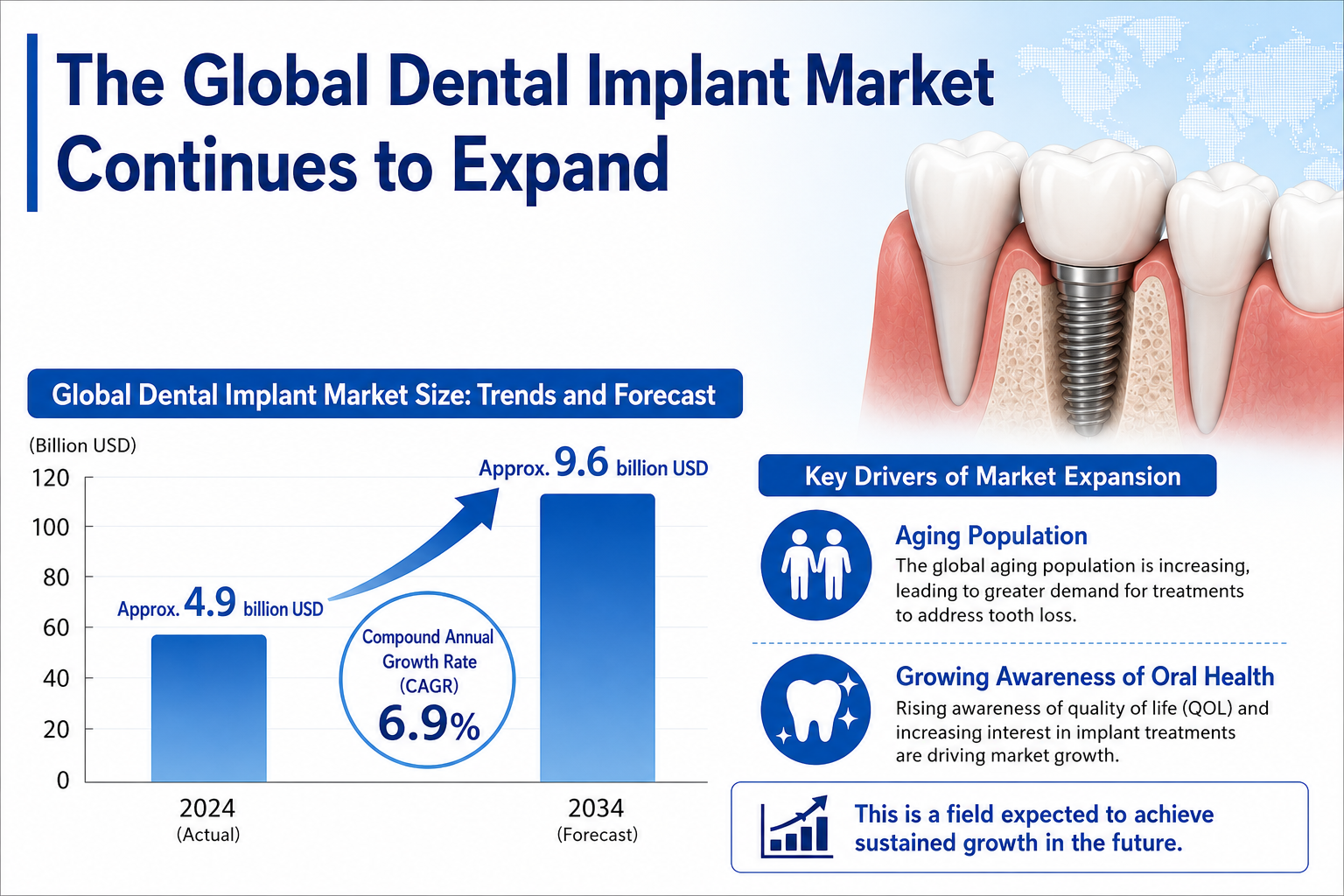
Figure 1. Growth of the Global Dental Implant Market
The Osseointegrated implant, which is currently the mainstream dental implant, has become widely accepted as an excellent treatment for restoring the chewing function and esthetics of lost teeth. However, it does not reproduce the Periodontal ligament, an important tissue that is naturally present in a Natural tooth (Figure 2). As a result, we believe that several challenges remain compared with a Natural tooth.
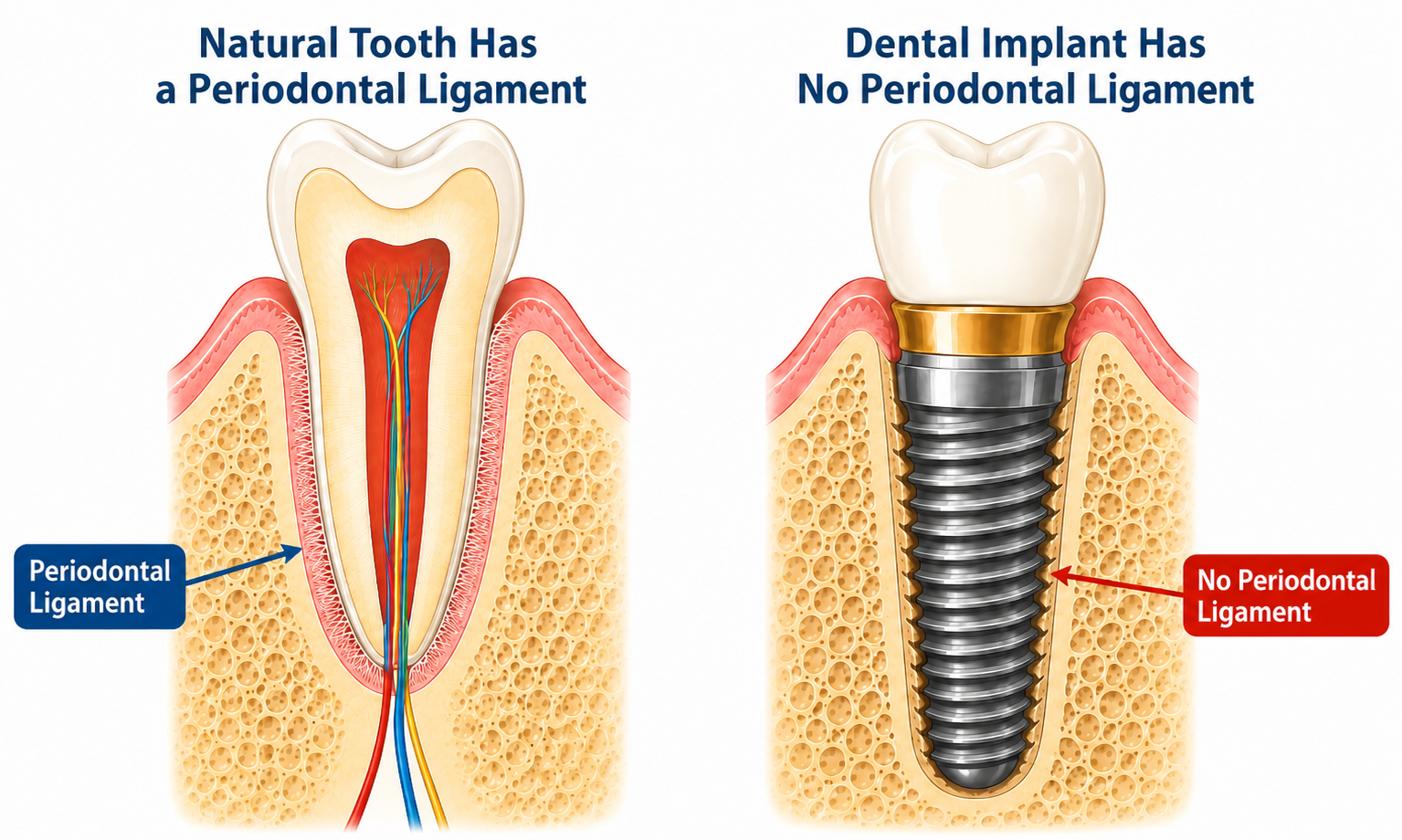
Figure 2. Natural tooth and Osseointegrated Implant
The first challenge is shock absorption during biting. In a Natural tooth, the Periodontal ligament functions as a cushion, absorbing and distributing the forces generated during mastication. In contrast, current implants are directly integrated with the bone and therefore do not possess this physiological cushioning function.
The second challenge is the sense of biting (sensory function). The Periodontal ligament, which is not reproduced in current implants, contains numerous nerve endings that transmit information such as biting force and food texture to the brain. This sensory function plays an important role in natural mastication and the maintenance of oral function.
The third challenge is biological defense. In a Natural tooth, the Periodontal ligament and Periodontal tissues work together to contribute to the body's defense against bacteria and other external factors. Current implants do not possess the same tissue structure as a Natural tooth, and this remains an area of ongoing research.
The fourth challenge is adaptation to physiological tooth movement. In a Natural tooth, bone remodeling occurs through the Periodontal ligament, allowing slight physiological tooth movement throughout life as well as orthodontic tooth movement. In contrast, implants that are directly integrated with the bone cannot be expected to undergo such physiological movement.
The fifth challenge is adaptation during the growth period. Because current implants have limited applicability in young patients whose jawbones are still growing, treatment is generally performed only after jaw growth has been completed.
A common feature underlying all of these challenges is the function of the Periodontal ligament, which is naturally present in a Natural tooth. For this reason, we believe that restoring the Periodontal ligament is one of the key challenges in developing next-generation implants.
At OrganTech, Inc., we are working to address this challenge by leveraging the technologies we have developed through our research in organ regeneration. Our goal is not simply to improve existing implants, but to provide patients with a new treatment option by more closely replicating the functions of a Natural tooth.
In the next chapter, we will introduce our technology, the Bio-hybrid Tooth, which embodies this concept. We will explain how the concept of a new implant equipped with a Periodontal ligament could create new possibilities for dental care.
The second challenge is the sense of biting (sensory function). The Periodontal ligament, which is not reproduced in current implants, contains numerous nerve endings that transmit information such as biting force and food texture to the brain. This sensory function plays an important role in natural mastication and the maintenance of oral function.
The third challenge is biological defense. In a Natural tooth, the Periodontal ligament and Periodontal tissues work together to contribute to the body's defense against bacteria and other external factors. Current implants do not possess the same tissue structure as a Natural tooth, and this remains an area of ongoing research.
The fourth challenge is adaptation to physiological tooth movement. In a Natural tooth, bone remodeling occurs through the Periodontal ligament, allowing slight physiological tooth movement throughout life as well as orthodontic tooth movement. In contrast, implants that are directly integrated with the bone cannot be expected to undergo such physiological movement.
The fifth challenge is adaptation during the growth period. Because current implants have limited applicability in young patients whose jawbones are still growing, treatment is generally performed only after jaw growth has been completed.
A common feature underlying all of these challenges is the function of the Periodontal ligament, which is naturally present in a Natural tooth. For this reason, we believe that restoring the Periodontal ligament is one of the key challenges in developing next-generation implants.
At OrganTech, Inc., we are working to address this challenge by leveraging the technologies we have developed through our research in organ regeneration. Our goal is not simply to improve existing implants, but to provide patients with a new treatment option by more closely replicating the functions of a Natural tooth.
In the next chapter, we will introduce our technology, the Bio-hybrid Tooth, which embodies this concept. We will explain how the concept of a new implant equipped with a Periodontal ligament could create new possibilities for dental care.

* This article reflects research and development-stage information as of August 3, 2026, and does not represent finalized medical procedures or products.