



Chapter
1 Teeth at the Heart of a Healthy Society
— The Key Role of the Periodontal Ligament
1 Teeth at the Heart of a Healthy Society
— The Key Role of the Periodontal Ligament
Last updated: January 30, 2026

Yoshio Shimo Representative Director, CEO
Graduated from Waseda University School of Science and Engineering and earned a master's degree from Chuo University Graduate School of Policy Studies. He was appointed Managing Officer at Toyota Motor Corporation in 2016, President of Hino Motors in 2017, and Chairman of Hino Motors in 2021. He has served as Representative Director and CEO of OrganTech since September 2024. View full profile >
Graduated from Waseda University School of Science and Engineering and earned a master's degree from Chuo University Graduate School of Policy Studies. He was appointed Managing Officer at Toyota Motor Corporation in 2016, President of Hino Motors in 2017, and Chairman of Hino Motors in 2021. He has served as Representative Director and CEO of OrganTech since September 2024. View full profile >
Entering the Untapped Frontier of the Periodontal Ligament
The global dental implant market was valued at approximately USD 4.9 billion in 2024 and is projected to expand to USD 8.4 billion by 2030, representing a compound annual growth rate (CAGR) of approximately 10%. In North America and Europe, well-established insurance and regulatory frameworks are accelerating clinical adoption, while in the Asia-Pacific region, population aging and rising disposable income are driving demand.
Within this rapidly expanding market, OrganTech, Inc. proposes a new standard for next-generation implants. Our objective is not merely artificial prosthetics, but the establishment of medical devices that restore the body's intrinsic biological functions.
Within this rapidly expanding market, OrganTech, Inc. proposes a new standard for next-generation implants. Our objective is not merely artificial prosthetics, but the establishment of medical devices that restore the body's intrinsic biological functions.
The Unresolved Limitation of Osseointegrated Implants — Absence of the Periodontal Ligament
Osseointegrated implants achieve high stability through direct bonding between the jawbone and artificial materials via osseointegration. However, the specialized supportive tissue present in the Natural tooth—the Periodontal ligament—has not been reproduced (Figure 1).
The Periodontal ligament plays essential roles including:
• absorption of occlusal forces
• proprioceptive feedback transmitting chewing sensation to the brain
• biological defense supported by vascular and immune components
The absence of these functions contributes over time to challenges such as bone resorption, component failure, and peri-implantitis, leaving room for improvement in both patient outcomes and healthcare economics.
We believe that this missing Periodontal ligament represents the core opportunity for next-generation innovation.
The Periodontal ligament plays essential roles including:
• absorption of occlusal forces
• proprioceptive feedback transmitting chewing sensation to the brain
• biological defense supported by vascular and immune components
The absence of these functions contributes over time to challenges such as bone resorption, component failure, and peri-implantitis, leaving room for improvement in both patient outcomes and healthcare economics.
We believe that this missing Periodontal ligament represents the core opportunity for next-generation innovation.
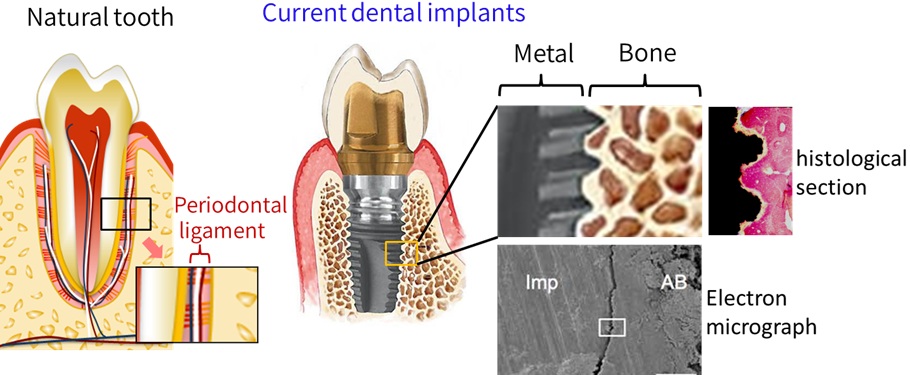
Figure 1 Structural design of Osseointegrated dental implants
Bio-hybrid Tooth — A Medical Device That Restores Biological Function
The Bio-hybrid Tooth developed by OrganTech, Inc. integrates an artificial scaffold with Periodontal ligament–derived tissue units, reconstructing the biological support system that anchors the tooth (Figure 2).
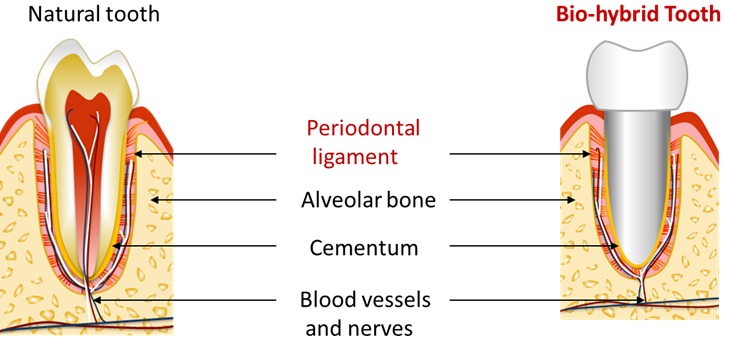
Figure 2 “Bio-hybrid Tooth,” a Periodontal ligament–integrated implant
This architecture is designed to restore:
• shock-absorbing properties comparable to the Natural tooth
• proprioceptive sensation during mastication
• biological defense functions supported by vascular networks
Furthermore, by adopting a cell-free design within the manufacturing process, the product is positioned for a medical device regulatory pathway (FDA 510(k), Class II), achieving scalability, quality consistency, and global deployment potential.
• shock-absorbing properties comparable to the Natural tooth
• proprioceptive sensation during mastication
• biological defense functions supported by vascular networks
Furthermore, by adopting a cell-free design within the manufacturing process, the product is positioned for a medical device regulatory pathway (FDA 510(k), Class II), achieving scalability, quality consistency, and global deployment potential.
Clinical Implementation and Scalability
The treatment protocol is designed to integrate seamlessly with Osseointegrated implant procedures, establishing a scalable and reproducible clinical workflow that minimizes dependency on individual clinician skill. This enables:
• reduced risk of reoperation
• efficient physician training
• standardized patient communication and informed consent processes
These factors collectively lower barriers to clinical adoption.
Beyond product supply, OrganTech, Inc. is building a platform-based business model that integrates education, clinical data, and quality management to achieve both sustainable profitability and rapid market penetration.
• reduced risk of reoperation
• efficient physician training
• standardized patient communication and informed consent processes
These factors collectively lower barriers to clinical adoption.
Beyond product supply, OrganTech, Inc. is building a platform-based business model that integrates education, clinical data, and quality management to achieve both sustainable profitability and rapid market penetration.
Extending Healthy Longevity and Global Expansion
The ability to chew with sensations equivalent to those of a Natural tooth is a fundamental pillar of health, closely linked to nutrition, cognitive function preservation, and prevention of systemic diseases. The Bio-hybrid Tooth holds the potential to improve healthcare quality while reducing long-term healthcare costs.
Leveraging Japan-originated academic technologies, we are progressively establishing international clinical, manufacturing, and commercialization frameworks with FDA approval in view, aiming to set a globally unified standard of care.
Leveraging Japan-originated academic technologies, we are progressively establishing international clinical, manufacturing, and commercialization frameworks with FDA approval in view, aiming to set a globally unified standard of care.

* This article reflects research and development-stage information as of January 30, 2026, and does not represent finalized medical procedures or products.